



A3E 2027 Anaheim
Building upon 25+ years of tracking technology’s impact on creativity, A3E 2027 Anaheim at The NAMM Show introduces and explores the Creative-Origin Ecosystem™ — where human creativity, artificial creativity, and advanced applications converge while keeping human creators at the creative center.
Across two days of A3E Cross-Cutting™ keynotes, sessions, and workshops, creators, technologists, rights leaders, studios, platforms, and innovators will examine the common language, transparency, trust, and standards needed for a healthy creative future.
From Human-Driven Content Creation (HDCC) and Hybrid Content Creation (HYB) to Human-Driven Content Creation Plus (HDCC+) and AI/AC-Driven Content Generation (AICG), A3E 2027 brings the industry together to understand, measure, and document the evolution of music and entertainment creation.
A3E 2027 Anaheim At-A-Glance: Friday, January 29th
| Friday January 29: HUNTINGTON ROOM, Hilton Anaheim, 4th Floor | |
|---|---|
| 10:30am - 12:00pm | Beyond Human vs AI: The Creative-Origin Ecosystem™ and the Future of Coexistence |
| 12:00pm - 1:00pm | Human-Created as Premium: The Future Market Value of Human-Origin Music |
| 1:00pm - 2:00pm | Generative Origins: New Frontiers in Ideation, Composition, Performance, and Production |
| 2:00pm - 3:00pm | Creative DNA: Artists Building Large Creative Models from Their Own Work |
| 3:00pm - 4:00pm | The Hybrid Creator: Human Direction, Machine Assistance, and Shared Output |
| 4:00pm - 5:00pm | GS7 |
| 5:00pm - 6:00pm | The Future of Music Technology Through the Eyes of Creative Systems Visionaries |
| Friday January 29: PALOS VERDES ROOM, Hilton Anaheim, 4th Floor | |
|---|---|
| 10:00am - 11:00am | GS9 |
| 11:00am - 12:00pm | GS10 |
| 12:00pm - 1:00pm | From Conflict to Collaboration: Standards for the New Creative Economy |
| 1:00pm - 2:00pm | Patchbays, Touch Control Surfaces, Network and Bluetooth MIDI, and More: Windows for Musicians and Developers in 2027 |
| 2:00pm - 3:00pm | GS13 |
| 3:00pm - 4:00pm | GS14 |
| 4:00pm - 5:00pm | Game Changing Music Accessibility Innovations: The US Premiere of Breaking Barriers |
| 5:00pm - 6:00pm | The MIDI Innovation Awards: What the Next Instruments Looks Like |
Friday, January 29th, 2027; 10:30AM – 12:00PM Pacific Time; Hilton Anaheim, 4th Floor, Huntington Room
Beyond Human vs AI: The Creative-Origin Ecosystem™ and the Future of Coexistence
The creative industries are entering a new era where human-driven, AI-generated, hybrid, and technology-augmented creation will coexist across music, entertainment, media, platforms, tools, rights, education, and commerce. This opening A3E Cross-Cutting™ Keynote introduces the Creative-Origin Ecosystem™ as a common-language approach for understanding, respecting, classifying, and navigating this future.
Moving beyond the simplistic “Human vs AI” debate, the session explores how creators, technologists, institutions, platforms, and rights holders can build a more transparent and constructive creative economy, one grounded in respect for human originality, responsible use of artificial creativity, clear disclosure, creative identity, accessibility, authorship, attribution, and coexistence.

Paul Sitar (Moderator) | President, A3E | CEO, Sitarian Corporation
Paul began his professional career as an aerospace underwriter, commercial pilot, and certified flight instructor. However, his passion for information technology led him to transition into the field of emerging technologies that impact all aspects of business and life. He accomplished this by launching research projects, trade shows, and conferences for prominent organizations such as Gartner, Inc. and Advanstar Communications, Inc., as well as for several of his own ventures such as NlightN, Inc., Sitarian Corporation, A3E LLC, and the The Electric Vehicle + Energy Infrastructure Innovation & Sustainability Exchange™. These efforts and projects have included a global footprint.
Paul has focused his attention on several areas, including music and entertainment technology, electric vehicles and next-generation mobility, healthcare informatics, electronic commerce, artificial and creative intelligence, robotics, IT security, cyber terrorism prevention, and critical infrastructure protection.
Paul’s experience also includes founding and managing a software security company for seven years. During this time, he successfully patented and commercialized a deviceless one-time password authentication system. Today, Paul continues his work in research, trade show and conference creation, and the launch of innovative projects in technology driven industries.
Friday, January 29th, 2027; 12:00PM – 1:00PM Pacific Time; Hilton Anaheim, 4th Floor, Huntington Room
Human-Created as Premium: The Future Market Value of Human-Origin Music
As AI-generated content scales across music, media, entertainment, advertising, games, and social platforms, human-created work may take on new economic, cultural, and emotional value. In a marketplace increasingly shaped by speed, automation, synthetic output, and infinite supply, the human story behind a work: who made it, how it was made, why it was made, and what creative choices shaped it, may become a meaningful signal of authenticity, trust, rarity, and value.
This HDCC-focused session explores whether human-origin music and content can become a premium market category, similar to how handmade, organic, craft, fair-trade, analog, live, local, and artist-direct movements created value in other industries. The discussion will examine fan behavior, artist branding, licensing, collector markets, sync, premium experiences, human-made labels, creator declarations, provenance, and the possibility that Creative-Origin may become not only a classification signal, but a monetization signal.
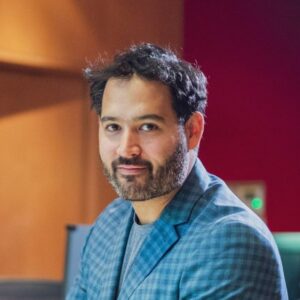
Lucas Cantor Santiago (Moderator) | Composer/Author/Investor | ListenHearNow / Extra Base Hits / Mindset MusicTech
Lucas Cantor Santiago is a composer and producer who’s won two Emmy awards. He’s the author of the book Unfinished, the role of the artist in the age of Artificial Intelligence, which is out now and available in bookstores and online. He’s a partner and co-founder at Mindset MusicTech, a Venture Capital fund that invests in the future of music.
Friday, January 29th, 2027; 1:00PM – 2:00PM Pacific Time; Hilton Anaheim, 4th Floor, Huntington Room
Generative Origins: New Frontiers in Ideation, Composition, Performance, and Production
AI-generated music, audio, and media are often discussed through the lens of disruption, automation, and market volume. But generative systems may also represent a new creative-origin frontier — one that changes how ideas are sparked, how musical structures are developed, how performances are imagined, and how production workflows evolve.
This AICG-focused session explores generative-origin creation as a distinct creative mode across expressive ideation, structural composition, performance and execution, and operational augmentation. The discussion will examine how generative tools can create unexpected starting points, support creative block breakthroughs, produce alternate musical directions, generate synthetic voices or instruments, enable adaptive sound worlds, and open new forms of music, audio, and entertainment experience.

Rithik Kundu | Co-Founder, Researcher, Producer | NYU Generative Audio & AI
Rithik Kundu is a researcher and producer bridging the gap between music, technology and people. He is the Co-Founder of NYU Generative Audio & AI, an interdisciplinary research group studying the translation between academic research and real-world music applications. His work explores how AI and other technology can reshape music creation and production. Rithik is currently conducting a research project The Future of Music Production: Is AI Taking Over?, a blind listener preference study between AI and human music advised by NYU Music Tech Director Paul Geluso, GRAMMY winner Mr. Sonic and NYU MARL faculty Dr. Morwaread M. Farbood. He is also co-author of Building a Simple AI DAW Part 2: MCP and Agents, a technical paper exploring creative AI with collaborators from Udio, Abbey Road Red, Masterchannel, Mozart AI, and others.
With the strategic perspective of a music producer and researcher, he sits on the advisory boards of various companies and research organizations looking to tap into creative AI for music and audio, including the newly founded Munich Music Labs at TUM, an AI music research initiative partnering with Mozart AI and ElevenLabs. Rithik has presented his research and perspective on the state of AI in music on panels at industry conferences such as Music Frontiers, Mondo, and Eurosonic, even moderating two panels at Mondo. He is also serving on the jury of the International Sound Awards, bringing his unique perspective on how music and technology can intersect.
Outside of AI research, he built a miniaturized prototype of the Ableton Push MIDI controller in 2023, and in 2024 followed that development with a bluetooth MIDI-controller dubbed the “KYTAR” which utilizes a pad-control interface as well as distance sensors to create theremin-based pitchbending. Under the stage name “RKY”, he scored the film Redamancy which won awards at the Flight Deck Film Festival and Wild Geese Gallery, the rom-com musical Down Bad which debuted in April 2025, collaborated with a major-label A&R, and produced and engineered the 2025 Tiny Desk Submission for the GRAMMY U-accepted band The Millers.
Friday, January 29th, 2027; 2:00PM – 3:00PM Pacific Time; Hilton Anaheim, 4th Floor, Huntington Room
Creative DNA: Artists Building Large Creative Models from Their Own Work
As generative tools evolve, artists, composers, producers, studios, and creators may increasingly look to their own bodies of work as the foundation for future creative systems. Recordings, stems, lyrics, sound libraries, sketches, project files, performances, prompts, samples, sessions, scores, and unfinished ideas can become more than an archive, they can become creator-controlled inputs for new Large Creative Models rooted in an artist’s own Creative-Origin.
This HDCC+ session explores how artists can leverage their own work, datasets, sonic identity, and creative history to build future-facing tools that extend their creative practice without surrendering control of their identity. The discussion will examine permissioned datasets, artist-owned archives, private sound libraries, creative continuity, model governance, rights management, attribution, monetization, and the boundary where human-origin augmentation may begin to cross into hybrid collaboration.
Friday, January 29th, 2027; 3:00PM – 4:00PM Pacific Time; Hilton Anaheim, 4th Floor, Huntington Room
The Hybrid Creator: Human Direction, Machine Assistance, and Shared Output
As AI tools become more embedded in songwriting, composition, production, sound design, voice, video, performance, and media workflows, many creators are entering a hybrid creative zone where human direction and machine assistance both shape the final work. These workflows may include prompting, curation, editing, selection, refinement, performance, arrangement, production decisions, and iterative exchanges between human judgment and generative systems.
This HYB-focused session explores what it means to be a hybrid creator in 2027. The discussion will examine how creative responsibility, authorship, attribution, and value may shift when the final output reflects both human intention and AI-generated contribution. It will also consider whether the industry needs new credit lines for hybrid works, including prompting, curation, editing, performance, refinement, model selection, dataset selection, and creative direction, so artists, collaborators, platforms, labels, publishers, and audiences can better understand who did what and how the work came to life.
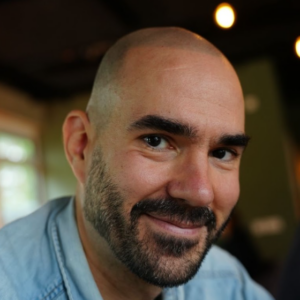

Christopher Wieduwilt | Founder | The AI Musicpreneur
Christopher Wieduwilt is the founder of The AI Musicpreneur. Every month, more than 40,000 music professionals and creators turn to his work to find out which AI music tools are worth their time, how to get results out of them, and what the latest AI music news means for their music and their business.
That work draws on two careers. Christopher has written and played his own music for more than 20 years, including a coast-to-coast US tour, and that’s the ear he brings to every tool he covers. Before The AI Musicpreneur, he worked in product management for startups and helped Lufthansa, Porsche, Goodyear and L’Oréal build digital products.
He sits on the Creative Advisory Council of SIQA, which runs the first global AI music charts.
Everything he publishes follows one rule: AI is a tool, and human judgment is the skill.
Friday, January 29th, 2027; 4:00PM – 5:00PM Pacific Time; Hilton Anaheim, 4th Floor, Huntington Room
(GS7) A3E 2027 Anaheim at The NAMM Show Session: TBA
A3E session description TBA
Friday, January 29th, 2027; 5:00PM – 6:00PM Pacific Time; Hilton Anaheim, 4th Floor, Huntington Room
The Future of Music Technology Through the Eyes of Creative Systems Visionaries
Music technology is evolving through many lenses at once: voice and character performance, live artistry, immersive audio, creator platforms, artist development, software infrastructure, audience experience, and human-machine creative systems. Presented in memoriam to Eros Marcello (1990–2026), and conceived in the spirit of his forward-looking curiosity and years of support for A3E educational programming, this session brings together a diverse group of creators, technologists, performers, audio leaders, and music business strategists to look beyond individual tools and toward the larger creative systems shaping the next era of music, audio, and entertainment.
Rather than treating the future as only AI, only platforms, or only production technology, the session asks how human performance, spatial experiences, creator workflows, fan relationships, identity, rights, and intelligent systems will converge. The conversation will explore how music technology can remain human-centered while becoming more adaptive, immersive, interactive, and collaborative — and how creative visionaries can help the industry imagine a future where artists, technologists, platforms, and audiences build the next ecosystem together.


Presented in memoriam to Eros Marcello (1990–2026)
Eros Marcello | Founder + AI Design Engineer, Quantum ML | ethereal computing
“I’m a multi-disciplinary Design Engineer (front-of-the-frontend) specializing in human-interfacing AI and Deep Tech. I’ve shipped AI-native interfaces, products and experiences @ Apple, Meta, Salesforce, Samsung, Pfizer and many others. I founded ethereal computing inc. in 2023, where we’re building a Quantum M- enhanced SDK for neuroadaptive human-machine interfaces for high-perf, high-compliance sectors including Defense + Military with dual-use for consumer + enterprise applications. I live/work out of NASA Ames Research Park on Moffett Field in Silicon Valley, California.”
Friday, January 29th, 2027; 10:00AM – 11:00AM Pacific Time; Hilton Anaheim, 4th Floor, Palos Verdes Room
(GS9) A3E 2027 Anaheim at The NAMM Show Session: TBA
A3E session description TBA
Friday, January 29th, 2027; 11:00AM – 12:00PM Pacific Time; Hilton Anaheim, 4th Floor, Palos Verdes Room
(GS10) A3E 2027 Anaheim at The NAMM Show Session: TBA
A3E session description TBA
Friday, January 29th, 2027; 12:00PM – 1:00PM Pacific Time; Hilton Anaheim, 4th Floor, Palos Verdes Room
From Conflict to Collaboration: Standards for the New Creative Economy
The creative industries are moving beyond the early “Human vs AI” debate and toward a more nuanced question: where and how is AI being used? In a more complex future, human-created, hybrid, augmented, and AI-generated works will coexist across platforms, tools, rights systems, studios, classrooms, marketplaces, and fan experiences. To support that future, the industry needs more than opinions. It needs responsive and adaptive infrastructure that supports common language, common understanding, transparency, trust, and practical standards to help creators, companies, institutions, and audiences understand how creative works are made and how they should be recognized.
This A3E Cross-Cutting™ session explores how A3E, the newly formed Music Tech Coalition, and other industry companies, organizations, and initiatives need to work together to advance voluntary education, research, frameworks, tools, pilots, and standards-aligned approaches for a healthier creative content ecosystem. The discussion will examine how creator and technology assessment tools, provenance, metadata, disclosure, rights awareness, and coalition-building can help move the industry from fragmented reaction to collaborative alignment.
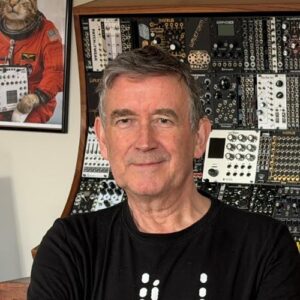
Peter F. Brown (Moderator) | Senior Director, Global Security & Technology Strategy | Venable LLP
Peter’s early interests in acoustics, technology and electronic music have contributed to a career spanning a wide-range of skills and experience covering political, societal, cultural, entrepreneurial, scientific, and technological domains, and which has led him to work on subject areas as varied as governance and policymaking; privacy, identity management, and trust; air transport and drone technology; cloud computing; artificial intelligence; internet of things (IoT); cybersecurity, and technology standards.
As a published author, and working in several languages, he has a reputation as a polymath and a polyglot. His professional career includes 25 years of experience in European public service and more than a decade in the private sector consulting on international standards engagement, technology strategy and governance. He currently works as Senior Director on Global Security and Technology Strategy at Venable LLP in Washington, DC.
He lives in Virginia with his life partner, a dog and a sometimes-functioning home studio focused on modular and analog synthesis.
Friday, January 29th, 2027; 1:00PM – 2:00PM Pacific Time; Hilton Anaheim, 4th Floor, Palos Verdes Room
Patchbays, Touch Control Surfaces, Network and Bluetooth MIDI, and More: Windows for Musicians and Developers in 2027
Windows MIDI Services brought MIDI 2.0 to Windows a year ago. First, Microsoft fixed the kinds of compatibility bugs that show up when you replace the innards of a 34-year-old API. Next is the fun part.
Microsoft has added native support for Network MIDI 2.0, and for RTP-MIDI, the network MIDI 1.0 that Macs and iPads use. Windows Bluetooth MIDI support is all new, too. There’s even a rewrite of the classic Microsoft GS Wavetable Synth (yes, that one) with MIDI 2.0 and MIDI Capability Inquiry (MIDI-CI) support. And there are from Microsoft over a dozen free, MIDI 2.0-enabled open-source tools for monitoring MIDI, routing and filtering, playing MIDI files, and more.
Gary and Pete will show you where things stand and where they’re going. Then they’ll demo the new apps and the ideas behind them, especially Windows MIDI Glass and Windows MIDI Patchbay. The first is a touch control surface you design yourself. The second routes, filters, and changes MIDI on its way between your devices and apps. They’ll also talk about how everything was built: where AI helped, and where it didn’t.
Finally, Microsoft will give an update on the new low-latency USB audio driver coming to Windows 11, and show it running.
Bring your questions and feedback about MIDI and audio on Windows. We’ll leave time for both.
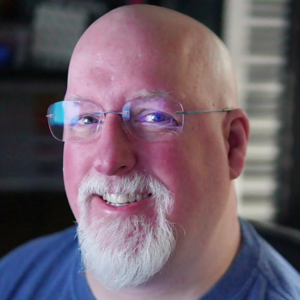

Pete Brown | Principal Software Engineer | Microsoft
Pete is Chair of the Executive Board of the MIDI Association. At Microsoft, Pete wears many hats, but is most proud of co-writing the new Windows MIDI Services stack, and creating all the new Windows MIDI applications, helping to bring MIDI 2.0 and enhanced MIDI 1.0 support to Windows.
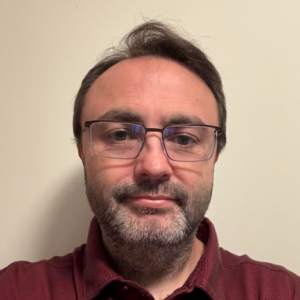
Gary Daniels | Principal Software Engineer | Microsoft
Gary is a long-time engineer in the Core OS Audio team in Windows, working on audio and MIDI. Among many other things, Gary has co-written the new Windows MIDI Services, and created the overall architecture for MIDI 2.0 support on Windows.
Friday, January 29th, 2027; 2:00PM – 3:00PM Pacific Time; Hilton Anaheim, 4th Floor, Palos Verdes Room
(GS13) A3E 2027 Anaheim at The NAMM Show Session: TBA
A3E session description TBA
Friday, January 29th, 2027; 3:00PM – 4:00PM Pacific Time; Hilton Anaheim, 4th Floor, Palos Verdes Room
(GS14) A3E 2027 Anaheim at The NAMM Show Session: TBA
A3E session description TBA
Friday, January 29th, 2027; 4:00PM – 5:00PM Pacific Time; Hilton Anaheim, 4th Floor, Palos Verdes Room
Game Changing Music Accessibility Innovations: The US Premiere of Breaking Barriers
The session opens with the US premiere of Breaking Barriers, a MIDI Association film made in association with MASSIG, the Music Accessibility Standard Special Interest Group. It is not the story of one exceptional individual overcoming an obstacle. It is a chorus — switch users, one-handed players, blind engineers, D/deaf and neurodivergent creators — and the developers building the instruments they play, tracked from a first sound to a finished record. The screening is followed by winners of the 2026 MIDI Innovation Awards, sponsored by NAMM, demonstrating their work live: adaptive controllers, gesture and breath interfaces, and MIDI 2.0’s higher-resolution capabilities used in the service of expression rather than specification. The panel then turns to Assistive Text, the MASSIG proposal for a MIDI-CI Profile that lets an instrument describe itself — so that a screen reader, braille display or large-print interface can speak a control’s name and its current value in real time, instead of leaving four decades of gear silent about what it is doing.


Athan Billias | President | The MIDI Association
Athan Billias has dedicate his whole life to music, technical innovation and MIDI. He played keyboard with Herb Reed and the Platters and Jerry Martini from Sly and the Family Stone. He then moved into the musical instrument industry as Product Planning Manager at Korg where he helped turn the Korg M1 into the largest selling music workstation of all time. He then Joined Yamaha as a Director of Marketing where he was involved with the product planning and marketing of Yamaha products including the Motif Series and the Montage. He has been on the Executive Board of The MIDI Association for over 25 years.
Friday, January 29th, 2027; 5:00PM – 6:00PM Pacific Time; Hilton Anaheim, 4th Floor, Palos Verdes Room
The MIDI Innovation Awards: What the Next Instruments Looks Like
Every year the MIDI Innovation Awards surface work that no product roadmap would have predicted: student prototypes, one-person hardware companies, open-source tools, and commercial instruments that take a genuine risk. The entries are a useful early warning system for where the industry is heading — accessibility, alternative controllers, AI-assisted performance, and new uses of MIDI 2.0 all showed up in the awards before they showed up in catalogs. This session presents standout entries and winners, with creators demonstrating their work directly, and explains how the awards are judged and how to enter. It is equally aimed at anyone building something unusual and anyone in the industry looking for what to license, distribute, or fund next.
Athan Billias | President | The MIDI Association
Athan Billias has dedicate his whole life to music, technical innovation and MIDI. He played keyboard with Herb Reed and the Platters and Jerry Martini from Sly and the Family Stone. He then moved into the musical instrument industry as Product Planning Manager at Korg where he helped turn the Korg M1 into the largest selling music workstation of all time. He then Joined Yamaha as a Director of Marketing where he was involved with the product planning and marketing of Yamaha products including the Motif Series and the Montage. He has been on the Executive Board of The MIDI Association for over 25 years.
Sitarian Corporation, Sitarian Research + Advisory Services and Sitarian Events + Programs operate and conduct their practices as an independent, unbiased, objective, and agnostic industry resource, with the primary goal of providing realistic, actionable, practicable business insights, information, as well as educational programming and content.